AOD-9604: A Research Overview
What AOD-9604 is, where it came from, and what laboratory research does and does not support about this growth-hormone fragment.
Read article
An introduction to MOTS-C, a peptide encoded by mitochondrial DNA, and its use in metabolic and stress-response research.
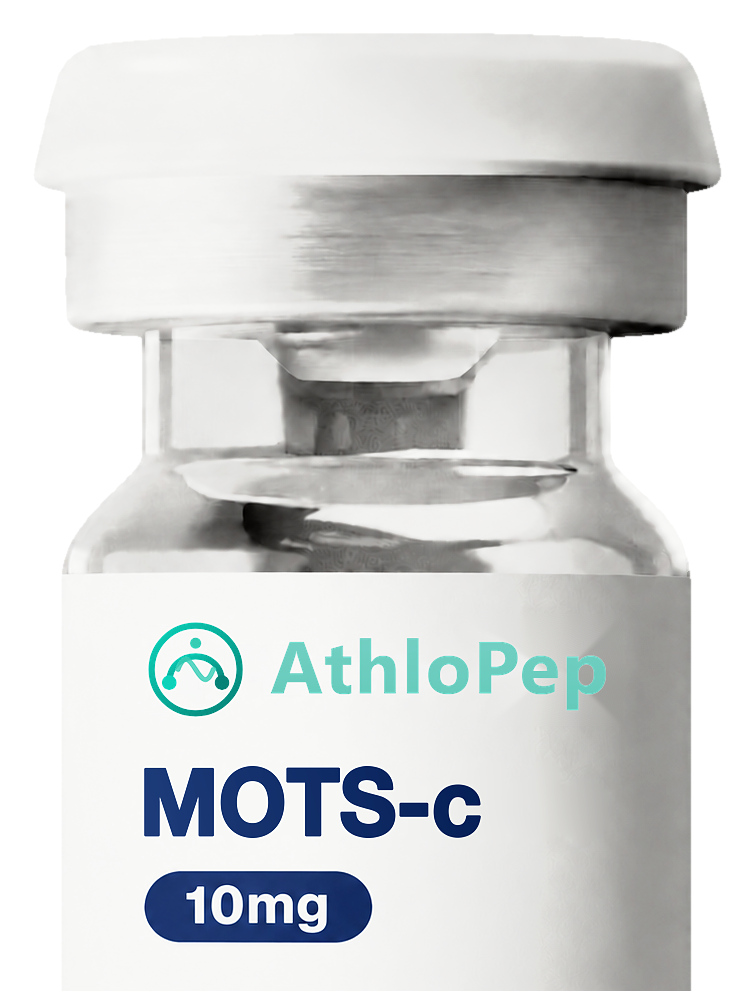
MOTS-c isn't made by the cell's usual protein-building machinery at all. It's encoded inside mitochondrial DNA, a discovery that opened up an entirely new category of peptide research into how cells sense stress and energy.
Buy MOTS-C (MOTSC) in Australia · compare strengths
Check current availability and choose options on the product page. Research Use Only.
MOTS‑c (Mitochondrial‑Derived peptide of the 16S rRNA) is a short chain of amino acids that mitochondria – the cell’s power plants – release into the circulation, and researchers are investigating whether it can act as a messenger that influences metabolic pathways.
Since its discovery in 2015, MOTS‑c has become a focal point for several distinct lines of inquiry. Scientists are asking a series of concrete questions that could help explain how the peptide fits into the broader picture of metabolic regulation.
MOTS‑c appears to act both inside cells and in the bloodstream. Inside the cell, the peptide can translocate to the nucleus – the control centre that houses DNA – where it binds to DNA‑binding proteins and alters transcription of genes involved in oxidative stress response. In the circulation, MOTS‑c is thought to engage a yet‑to‑be‑fully‑characterised cell‑surface receptor that triggers downstream signalling through the AMPK pathway, a master regulator that switches on processes such as glucose uptake and fatty‑acid oxidation when energy is scarce. This cascade can ultimately shift the cell’s metabolic balance toward increased efficiency and reduced oxidative damage, which is why the peptide attracts interest in studies of metabolism and ageing.
In cultured mouse myoblasts (muscle precursor cells), adding synthetic MOTS‑c to the medium increased phosphorylation of AMPK – a chemical tag that turns the enzyme on – and led to higher expression of genes that facilitate glucose transport. Similar experiments in human endothelial cells (cells that line blood vessels) reported reduced markers of oxidative stress after MOTS‑c treatment, suggesting an anti‑oxidant signalling effect. These findings are limited to isolated cells under controlled conditions, but they provide a mechanistic glimpse of how the peptide can influence metabolic pathways.
Rodent studies have explored MOTS‑c in whole‑body contexts. In a diet‑induced obesity model, mice receiving daily injections of MOTS‑c showed modestly lower fasting blood glucose and improved insulin tolerance compared with untreated controls, although the effect size varied between studies. Another investigation using a caloric‑restriction paradigm found that circulating MOTS‑c levels naturally rose, and that mice lacking the gene for MOTS‑c exhibited blunted activation of AMPK in skeletal muscle. These animal data hint that MOTS‑c may participate in adaptive metabolic responses, but they also underscore variability that depends on experimental design and species.
To date, there are no peer‑reviewed clinical trials that have directly administered MOTS‑c to people. A handful of observational studies have measured blood MOTS‑c concentrations in small cohorts and reported correlations with fitness level, age, and metabolic markers such as fasting glucose. Correlation does not prove causation, and the limited sample sizes mean the findings are still preliminary. The absence of interventional human data is a key gap that prevents firm conclusions about the peptide’s relevance to human metabolism.
MOTS‑c belongs to a family of mitochondrial‑derived peptides that includes Humanin and the small‑humanin‑like peptides (SHLPs). While Humanin has been studied primarily for neuroprotective properties, MOTS‑c is distinguished by its reported ability to influence AMPK signalling, a pathway more directly linked to energy balance. Compared with classic metabolic peptides such as GLP‑1, which act on gut‑derived hormone receptors to stimulate insulin secretion, MOTS‑c works upstream by modulating cellular energy sensors. This mechanistic distinction may make MOTS‑c an attractive tool for researchers seeking to dissect intracellular metabolic networks rather than hormone‑mediated effects.
A separate but adjacent research category is the mitochondria‑targeted peptide class, exemplified by SS‑31 (elamipretide) , which is designed to accumulate in the inner mitochondrial membrane rather than act as a circulating messenger. Studies frequently run mitochondrial‑derived peptides like MOTS‑c alongside membrane-targeted compounds such as SS‑31 to separate signalling-mediated effects from direct bioenergetic ones.
Key uncertainties remain. The identity of the cell‑surface receptor that mediates extracellular MOTS‑c signalling is still under investigation. Dose‑response relationships in mammals have not been rigorously mapped, and long‑term safety data are lacking. Moreover, it is unclear whether the modest metabolic changes observed in rodents translate to meaningful effects in humans, especially given species‑specific differences in mitochondrial biology. Finally, the stability of MOTS‑c in biological fluids and its pharmacokinetic profile (how quickly it is broken down or cleared) need thorough characterization before any translational step.
Operator’s desk: At present, MOTS‑c remains a research tool rather than a candidate for therapy; the field is moving quickly, so keep an eye on emerging pre‑clinical studies that address the receptor question.
MOTS‑c and related peptides are supplied for research and educational purposes only. They are not listed on the Australian Register of Therapeutic Goods (ARTG) and are not intended for human or animal consumption.
Links lead to the original paper, DOI record, or open-access full text where available.
This compound is supplied for in vitro laboratory and educational research only. It is not listed on the Australian Register of Therapeutic Goods (ARTG) and is not a therapeutic good under the Therapeutic Goods Act 1989 (Cth). Not for human or animal consumption, therapeutic use, or diagnostic procedures. By purchasing, you confirm you are a qualified researcher or acting on behalf of a licensed research facility, and you assume full responsibility for the safe handling, storage, and lawful use of this compound.
What AOD-9604 is, where it came from, and what laboratory research does and does not support about this growth-hormone fragment.
Read article
A research-focused look at the synthetic tetrapeptide Epitalon, its study context, and what telomere research can responsibly support.
Read article
An evidence-led overview of Selank, its origin as a tuftsin analogue, and the boundaries of the research around stress and immune signalling.
Read article
A summary of KPV (Lys-Pro-Val), the cell and animal research behind it, and the limitations of the existing evidence.
Read articleTell us what you need. An email address is required so we can reply.