AOD-9604: A Research Overview
What AOD-9604 is, where it came from, and what laboratory research does and does not support about this growth-hormone fragment.
Read article
A summary of KPV (Lys-Pro-Val), the cell and animal research behind it, and the limitations of the existing evidence.
A research overview of KPV (Lys-Pro-Val), the published cell and animal evidence, and the limits of the current evidence base.
Check current availability and choose options on the product page. Research Use Only.
KPV (Lys‑Pro‑Val) is the three-amino-acid C-terminal fragment of α-melanocyte-stimulating hormone (α-MSH). Published work has examined whether this short fragment retains selected anti-inflammatory activity without the broader receptor activity associated with the parent peptide. [ 1 ] , [ 2 ]
The current literature is mainly preclinical. Researchers are examining cellular uptake, intracellular inflammatory-signalling pathways, and effects in experimental animal models. Those questions should not be confused with evidence of safety or effectiveness in people.
The clearest mechanistic evidence comes from a 2008 study using human intestinal epithelial and immune-cell lines. It reported PepT1-mediated uptake of KPV, followed by reduced activation of NF‑κB and MAPK signalling and lower IL‑8 secretion in that experimental setting. [ 4 ] This is evidence about a defined laboratory model; it does not establish a general receptor mechanism across tissues or species.
In the published intestinal cell and immune-cell experiments, KPV uptake was linked to changes in NF‑κB and MAPK signalling and cytokine output. These are useful mechanistic observations, but they are limited to controlled models and do not determine how KPV behaves in a whole organism or in people. [ 4 ]
Mouse studies have investigated KPV in experimentally induced intestinal-inflammation models. The reports describe changes in model-specific inflammatory outcomes, but those findings remain preclinical and cannot establish a therapeutic effect or safety profile in humans. [ 3 ] , [ 4 ]
We have not identified published clinical trials that establish KPV’s safety, efficacy, pharmacokinetics, or appropriate use in people. The available evidence should therefore be read as preliminary laboratory and animal research, not as a basis for human use.
KPV is best understood in the context of α-MSH-derived fragments. Reviews describe how structural fragments can retain selected activities while differing from full-length melanocortin peptides in receptor interactions and experimental effects. Direct comparisons between KPV and other research peptides are limited, so claims of relative potency or selectivity should be treated cautiously. [ 1 ] , [ 2 ]
Important gaps include the reproducibility of results across models, the relevance of PepT1-mediated uptake outside the studied systems, pharmacokinetics, off-target activity, and all human safety or efficacy questions. The literature does not support filling those gaps with dose, administration, or outcome claims.
The most useful way to read the KPV literature is to separate the type of evidence from the conclusion being made. A cell experiment can help identify a candidate pathway, such as PepT1-mediated uptake or NF‑κB signalling. A mouse experiment can test whether a change is observed in that specific animal model. Neither, by itself, answers whether the same result occurs in people, at what exposure, or with what safety profile. [ 3 ] , [ 4 ]
For research planning, that distinction matters more than a broad claim that a peptide “works.” Check the model, outcome measurement, comparator, and stated limitations in each paper. The four sources below are a starting point for that review; they should be read alongside any newer primary literature before drawing a compound-specific conclusion.
Evidence note: this overview describes preclinical research only. It is not a recommendation, protocol, or evidence of human safety or efficacy.
KPV peptide is supplied for research and educational purposes only. It is not listed on the Australian Register of Therapeutic Goods (ARTG) and must not be consumed by humans or animals. All experimental use should follow institutional safety guidelines and relevant regulations.
Researching melanocortin-independent anti-inflammatory pathways? View KPV . For related tissue and inflammation research, see the BPC-157 evidence review and how TB-500 and BPC-157 differ mechanistically .
Links lead to the original paper, DOI record, or open-access full text where available.
This compound is supplied for in vitro laboratory and educational research only. It is not listed on the Australian Register of Therapeutic Goods (ARTG) and is not a therapeutic good under the Therapeutic Goods Act 1989 (Cth). Not for human or animal consumption, therapeutic use, or diagnostic procedures. By purchasing, you confirm you are a qualified researcher or acting on behalf of a licensed research facility, and you assume full responsibility for the safe handling, storage, and lawful use of this compound.
What AOD-9604 is, where it came from, and what laboratory research does and does not support about this growth-hormone fragment.
Read article
A research-focused look at the synthetic tetrapeptide Epitalon, its study context, and what telomere research can responsibly support.
Read article
An evidence-led overview of Selank, its origin as a tuftsin analogue, and the boundaries of the research around stress and immune signalling.
Read article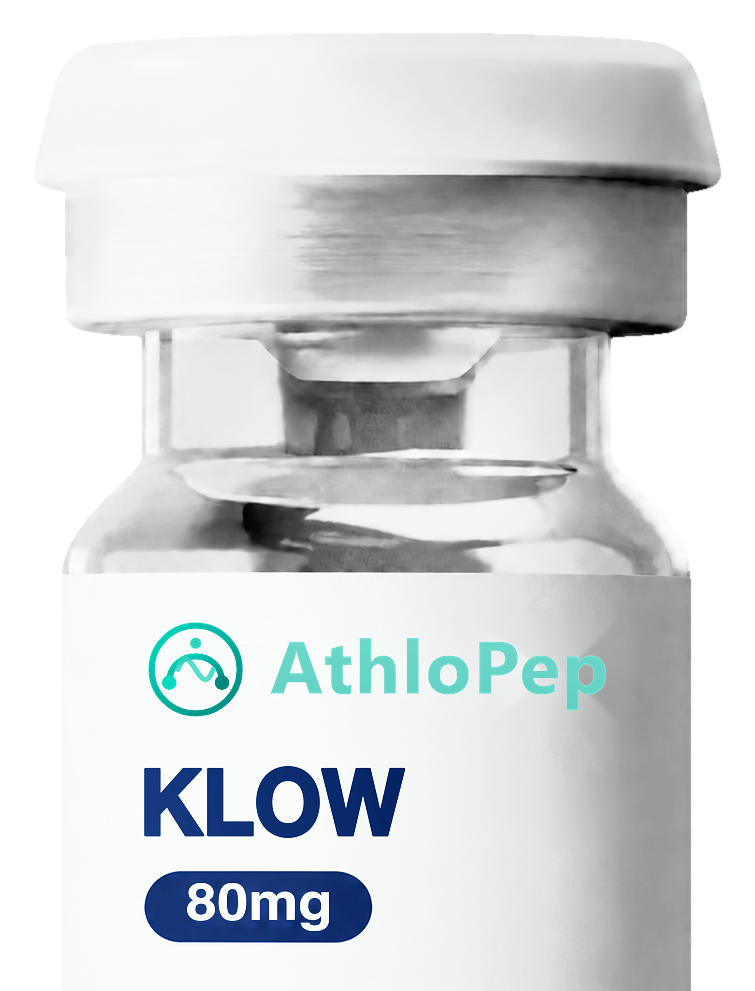
How the KLOW blend is defined, what its four components are, and why a blend name, a label claim and measured batch composition are different things.
Read articleTell us what you need. An email address is required so we can reply.