AOD-9604: A Research Overview
What AOD-9604 is, where it came from, and what laboratory research does and does not support about this growth-hormone fragment.
Read article
Separating media nicknames from the actual melanocortin receptor research background of Melanotan II.
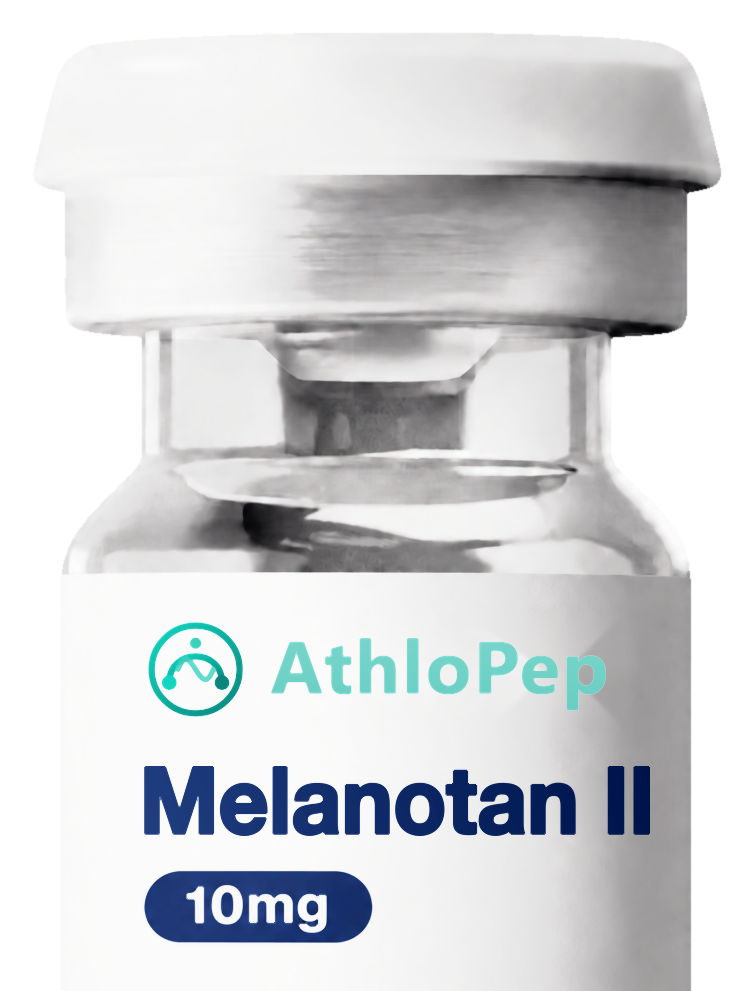
Australian media has occasionally labelled Melanotan II the "Barbie drug." The nickname gets attention, but it says nothing about the melanocortin receptor research the compound is actually used for. Here's the distinction.
Buy Melanotan II (MT2) in Australia
Check current availability and choose options on the product page. Research Use Only.
Search "Melanotan II" and you'll quickly run into two very different bodies of content: tabloid-style coverage referring to it as the "Barbie drug" or "tanning peptide," and a separate, much older body of pharmacology literature studying it as a tool compound for melanocortin receptor research. Both are talking about the same molecule. They're not talking about the same thing.
Melanotan II produces a visible pigmentation response by acting on melanocortin receptors, which is the part of its profile that made it a recognisable subject for general-interest media coverage - hence nicknames like "tanning peptide" and, less flatteringly, "Barbie drug." That coverage focuses almost entirely on the pigmentation effect and rarely engages with the receptor pharmacology underneath it, which is where the actual research interest lies.
Melanotan II is a cyclic lactam analogue of α-melanocyte-stimulating hormone (α-MSH). The cyclic structure - as opposed to a linear peptide chain - locks it into a stable, bioactive conformation and confers resistance to enzymatic degradation, which is precisely why it became a useful research tool in the first place. It's a non-selective agonist across the melanocortin receptor family: MC1R, MC3R, MC4R, and MC5R.
Because Melanotan II hits all four receptors rather than being selective for one, it's frequently used in structure-activity relationship (SAR) studies - as a reference compound against which more selective, newer analogues are benchmarked. That's a fundamentally different use case than what tabloid coverage of the "tanning peptide" label implies.
The two are often confused. Melanotan I (afamelanotide) has a narrower, more selective receptor activity profile, while Melanotan II's non-selective, multi-receptor activity is exactly what makes it useful as a broad pharmacological comparator in melanocortin research. They are related but structurally and functionally distinct compounds.
Structure-activity relationships across the four melanocortin receptors are still an active area of study, particularly around designing more receptor-selective analogues. As with the media narrative, most publicly available discussion of Melanotan II conflates the pigmentation effect with the compound's broader receptor pharmacology - the two are related but not the same research question.
Melanotan II is supplied by for in vitro laboratory research use only, under the Research Use Only (RUO) framework. It is not listed on the Australian Register of Therapeutic Goods (ARTG) and is not intended for human or animal consumption, therapeutic use, or diagnostic procedures.
Researching melanocortin receptor pharmacology? View Melanotan II .
Links lead to the original paper, DOI record, or open-access full text where available.
This compound is supplied for in vitro laboratory and educational research only. It is not listed on the Australian Register of Therapeutic Goods (ARTG) and is not a therapeutic good under the Therapeutic Goods Act 1989 (Cth). Not for human or animal consumption, therapeutic use, or diagnostic procedures. By purchasing, you confirm you are a qualified researcher or acting on behalf of a licensed research facility, and you assume full responsibility for the safe handling, storage, and lawful use of this compound.
What AOD-9604 is, where it came from, and what laboratory research does and does not support about this growth-hormone fragment.
Read article
A research-focused look at the synthetic tetrapeptide Epitalon, its study context, and what telomere research can responsibly support.
Read article
An evidence-led overview of Selank, its origin as a tuftsin analogue, and the boundaries of the research around stress and immune signalling.
Read article
A summary of KPV (Lys-Pro-Val), the cell and animal research behind it, and the limitations of the existing evidence.
Read articleTell us what you need. An email address is required so we can reply.