Glutathione: The Body's Own Antioxidant Peptide
Why glutathione draws research interest as an endogenous antioxidant, and how its cellular levels are studied in the lab.
Read article
The origins of Semax in neuropeptide research and its use as a tool for studying BDNF-related signalling.
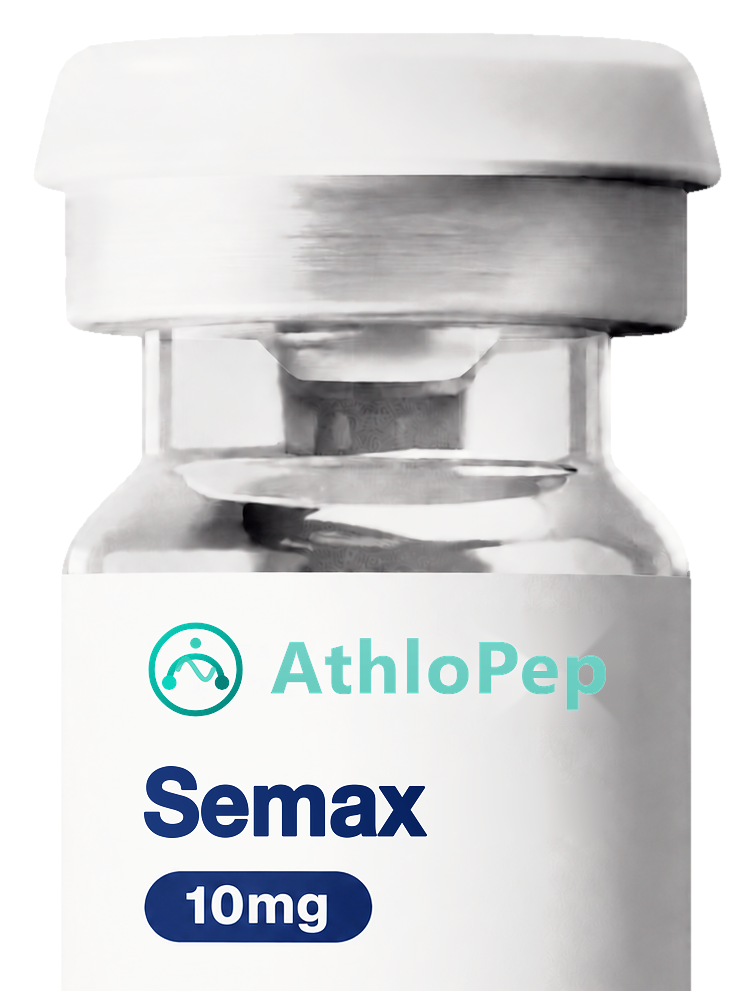
Semax started as a Russian-developed peptide for neurological research and has become a go-to tool for studying BDNF, a protein your brain relies on to build new connections.
Check current availability and choose options on the product page. Research Use Only.
Semax is a short peptide, just seven amino acids long, originally developed in Russia decades ago as a tool for neurological research. What's kept it relevant is a protein it's closely tied to: BDNF, short for brain-derived neurotrophic factor. Think of BDNF as fertiliser for brain cells - it helps neurons grow, connect, and survive. Semax research is largely about understanding whether the peptide can influence how much BDNF the brain produces.
Semax is built from a small fragment of ACTH, a hormone your body naturally produces, with an extra three-amino-acid tail added on the end. That added tail is the whole point - it's what stops enzymes in the body from breaking the peptide down almost instantly, giving researchers a more stable tool to work with in the lab.
Semax doesn't appear to work through one single, clean receptor lock-and-key mechanism the way many peptides do. Instead, research points to it nudging several systems at once: boosting BDNF expression, modulating dopamine and serotonin activity, and supporting cell survival pathways during stress. The BDNF connection is the one that gets the most attention, since more BDNF generally means better conditions for neurons to grow new connections and repair themselves.
Laboratory studies in neuron cell cultures have reported measurable increases in BDNF levels after Semax exposure. Animal studies have gone further, linking those BDNF changes to improved performance on memory and learning tasks, along with signs of reduced neural damage in stress and injury models. Much of the foundational research on Semax originates from Russian institutions, and results are still being independently reproduced and expanded on by researchers elsewhere. Human data remains limited and mostly early-phase.
BDNF is one of the most studied proteins in neuroscience because it's directly tied to neuroplasticity - your brain's ability to rewire and adapt. Low BDNF levels are associated with a range of research areas including cognitive decline and mood-related conditions, which is exactly why a peptide that may influence BDNF expression draws so much interest from researchers studying brain health and focus.
The precise molecular target Semax engages to trigger BDNF release isn't fully mapped yet - much of the mechanism is inferred from downstream effects rather than a confirmed single receptor. Long-term effects of repeated exposure haven't been well studied, and there's limited independent human data to confirm how well animal findings translate.
Every batch of Semax sold by is independently HPLC and mass spectrometry verified, with a batch-specific Certificate of Analysis included with every order.
Semax is supplied for in vitro laboratory research purposes only. It is not listed on the Australian Register of Therapeutic Goods (ARTG) and is not intended for human or animal consumption. All experimental work should follow institutional safety guidelines and applicable regulations.
Studying BDNF or neuropeptide signalling? View Semax 10mg - HPLC tested, COA included, same-day Australian dispatch.
Links lead to the original paper, DOI record, or open-access full text where available.
This compound is supplied for in vitro laboratory and educational research only. It is not listed on the Australian Register of Therapeutic Goods (ARTG) and is not a therapeutic good under the Therapeutic Goods Act 1989 (Cth). Not for human or animal consumption, therapeutic use, or diagnostic procedures. By purchasing, you confirm you are a qualified researcher or acting on behalf of a licensed research facility, and you assume full responsibility for the safe handling, storage, and lawful use of this compound.
Why glutathione draws research interest as an endogenous antioxidant, and how its cellular levels are studied in the lab.
Read article
How Melanotan II interacts with melanocortin pathways involved in pigmentation, and what researchers actually examine.
Read articleA plain-language look at the regulatory context for research-use peptides in Australia and what labs should verify when sourcing compounds.
Read article
GLOW brings three research peptides together. A careful look at what each component is studied for, and why blend evidence is not the same as single-compound evidence.
Read articleTell us what you need. An email address is required so we can reply.