Semax: A Peptide for Brain Signalling Research
The origins of Semax in neuropeptide research and its use as a tool for studying BDNF-related signalling.
Read article
Why glutathione draws research interest as an endogenous antioxidant, and how its cellular levels are studied in the lab.
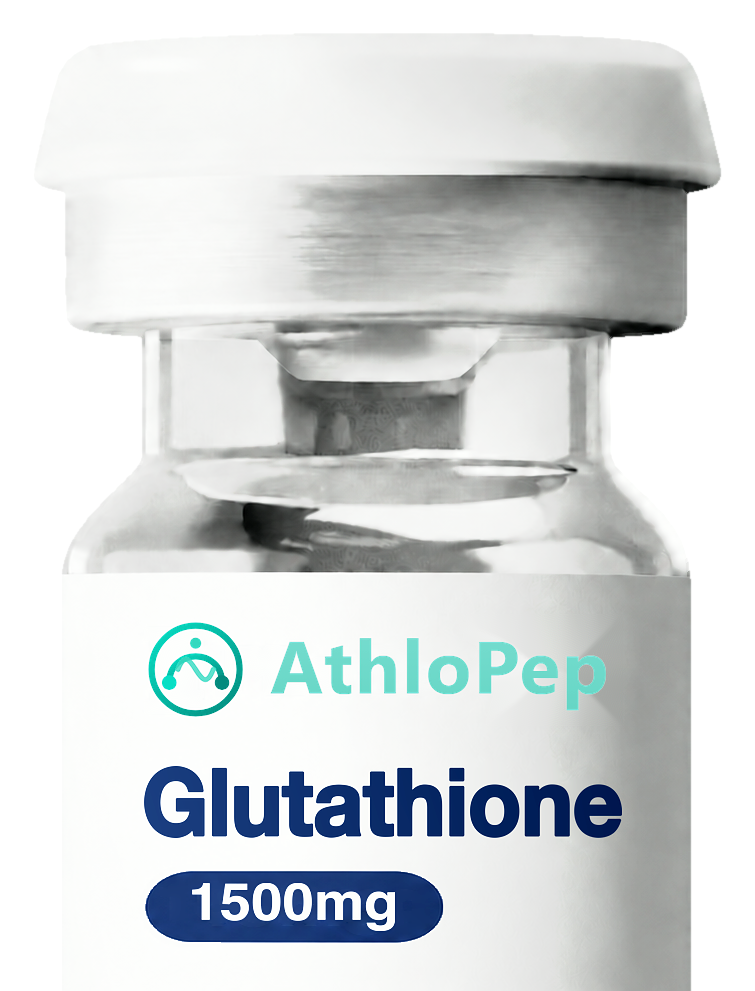
Glutathione isn't some exotic lab invention - your own cells produce it constantly. Researchers are interested in what happens to biology when levels of it change.
Check current availability and choose options on the product page. Research Use Only.
Glutathione is a little unusual on this list, because unlike most research peptides, it's not something a lab designed from scratch - it's a molecule your own cells make continuously. It's a tripeptide, meaning it's built from just three amino acids (glutamate, cysteine, and glycine), and it's often described as the body's master antioxidant because of how central it is to how cells defend themselves against oxidative stress.
Oxidative stress happens when unstable molecules called free radicals build up faster than the body can neutralise them, and it's a process researchers link to cellular ageing and a wide range of biological research areas. Glutathione is one of the main tools your cells use to keep that process in check. It works by donating electrons to neutralise free radicals, a bit like a chemical shock absorber that takes the hit so other, more sensitive cell structures don't have to.
Glutathione exists in two forms: an active, "reduced" form that's ready to neutralise free radicals, and an inactive, "oxidised" form left over after it's done its job. Cells run a recycling system to convert the used-up form back into the active one, so the whole process can repeat. Researchers are particularly interested in this recycling step, because how efficiently a cell can regenerate active glutathione appears to be just as important as how much glutathione is present in total.
Cell studies consistently show that glutathione levels drop under oxidative stress conditions, and that boosting glutathione availability in these models tends to reduce markers of cellular damage. Liver cell research has focused heavily on glutathione's role in detoxification, since the liver relies on it extensively to process and clear compounds. Skin cell studies have also looked at pigmentation-related effects, an area that continues to attract active research interest. Human data is broader than for many newer research peptides, given glutathione's long research history, but questions remain about how effectively it can be delivered to cells intact.
One of the more interesting research problems with glutathione is that, taken as a whole molecule, it tends to get broken down into its three individual amino acids before cells can use it intact. This has led researchers to study different delivery approaches to work around that breakdown, which remains one of the more active open questions in the field.
The most efficient way to raise intracellular glutathione levels is still a genuinely open research question. Long-term effects of sustained elevated glutathione levels aren't fully mapped, and how findings from cell and animal models translate to broader physiology is still being studied.
Oxidative-stress research increasingly runs alongside cellular energy and redox biology, where the coenzyme NAD+ is a central focus - studies of ageing cell models often measure glutathione recycling and NAD+ availability together, since both sit in the same network of pathways that keep oxidative damage in check.
Glutathione 1500mg is available on preorder at with batch analytical documentation. This article is provided as research and educational context.
Information provided here is for research and educational purposes only and does not describe a product supplied by .
Interested in oxidative stress and cellular research? View GHK-Cu , a copper tripeptide studied in related gene-expression and extracellular matrix research.
Links lead to the original paper, DOI record, or open-access full text where available.
This compound is supplied for in vitro laboratory and educational research only. It is not listed on the Australian Register of Therapeutic Goods (ARTG) and is not a therapeutic good under the Therapeutic Goods Act 1989 (Cth). Not for human or animal consumption, therapeutic use, or diagnostic procedures. By purchasing, you confirm you are a qualified researcher or acting on behalf of a licensed research facility, and you assume full responsibility for the safe handling, storage, and lawful use of this compound.
The origins of Semax in neuropeptide research and its use as a tool for studying BDNF-related signalling.
Read article
How Melanotan II interacts with melanocortin pathways involved in pigmentation, and what researchers actually examine.
Read articleA plain-language look at the regulatory context for research-use peptides in Australia and what labs should verify when sourcing compounds.
Read article
GLOW brings three research peptides together. A careful look at what each component is studied for, and why blend evidence is not the same as single-compound evidence.
Read articleTell us what you need. An email address is required so we can reply.