Peptide Classes: How Researchers Organise Small Proteins
How peptides are grouped by length and function, from short tripeptides to longer chains, and why classification matters in research.
Read article
A step-by-step view of how research peptides are assembled on solid-phase resin and how process choices influence final purity.
Every research peptide starts as a chain built one amino acid at a time on a solid resin bead. The small variations in that process explain most of the purity differences researchers see between suppliers.
Research peptides start as strings of amino acids assembled in a lab and end up as powdered vials ready for the bench – a journey that determines purity, stability and reproducibility.
Scientists choose a peptide for a study because its sequence is thought to mimic a natural hormone, act as a signalling probe, or interfere with a disease pathway. The way that sequence is produced can introduce tiny impurities or structural variants that change how the molecule behaves in a cell culture or animal model, potentially skewing results.
The most common route for research peptides is solid‑phase peptide synthesis (SPPS). In SPPS a resin bead provides a solid support, and amino acids are added one by one in a repetitive cycle of de‑protection (removing a blocking group) and coupling (linking the next residue). This stepwise construction allows precise control over the sequence, but each cycle can leave behind incomplete reactions that appear as shorter “deletion” peptides if not fully driven to completion.
SPPS typically uses Fmoc (9‑fluorenylmethoxycarbonyl) chemistry because the protecting group can be removed under mild basic conditions, preserving sensitive side chains. After the chain reaches its full length, a global de‑protection step removes all side‑chain protecting groups, and the peptide is cleaved from the resin. The crude product then contains the target peptide, truncated sequences, and trace reagents that must be removed in later steps.
For longer peptides or small proteins, researchers may turn to recombinant expression in bacteria, yeast, or mammalian cells. The gene encoding the desired sequence is inserted into a plasmid, expressed as a fusion protein, and later cleaved to release the peptide. This method can yield large quantities with fewer synthetic by‑products, but it may introduce host‑cell contaminants such as endotoxin that require additional clearance steps.
A niche approach involves extracting a peptide directly from natural tissue or secretions. While this can produce a molecule with native post‑translational modifications, the yields are low and the process is difficult to standardise, making it unsuitable for most research applications.
Every manufacturing step is followed by analytical testing to confirm that the peptide matches its intended specification.
A Certificate of Analysis (CoA) from a reputable supplier will list the methods used for each test, the acceptance criteria, and the actual results for the specific batch you receive.
Once purified, the peptide is typically lyophilised – frozen and then sublimated under vacuum – to produce a dry, stable powder. The lyophilised cake is weighed, divided into aliquot vials, and sealed under inert gas or vacuum to minimise moisture uptake. Each vial is labelled with the peptide’s name, sequence, batch number and storage instructions (often “store at –20 °C, protect from light”).
Compared with recombinant expression, SPPS offers faster turnaround for short sequences (typically under 50 residues) and tighter control over unnatural amino acids or chemical modifications. However, recombinant methods can achieve higher overall yields for longer chains and avoid some synthetic side‑products. Native extraction remains the least common because of cost and variability, but it is the only way to obtain naturally glycosylated or phosphorylated forms that synthetic chemistry cannot yet replicate.
Most published data focus on the chemical purity of a peptide, but less is known about how subtle batch‑to‑batch differences affect biological read‑outs. Long‑term stability under repeated freeze‑thaw cycles has been examined for only a handful of sequences, leaving open questions about storage practices in busy labs. Finally, the impact of trace metal contamination from synthesis resins on cell‑based assays has not been systematically explored.
All peptides discussed in this article are for research and educational use only. They are not listed on the Australian Therapeutic Goods Administration (ARTG) and are not intended for human or animal consumption.
Links lead to the original paper, DOI record, or open-access full text where available.
This compound is supplied for in vitro laboratory and educational research only. It is not listed on the Australian Register of Therapeutic Goods (ARTG) and is not a therapeutic good under the Therapeutic Goods Act 1989 (Cth). Not for human or animal consumption, therapeutic use, or diagnostic procedures. By purchasing, you confirm you are a qualified researcher or acting on behalf of a licensed research facility, and you assume full responsibility for the safe handling, storage, and lawful use of this compound.
How peptides are grouped by length and function, from short tripeptides to longer chains, and why classification matters in research.
Read articleWhy some peptides persist for days and others for minutes, and how structural features let researchers predict stability.
Read articleA plain-language look at the regulatory context for research-use peptides in Australia and what labs should verify when sourcing compounds.
Read article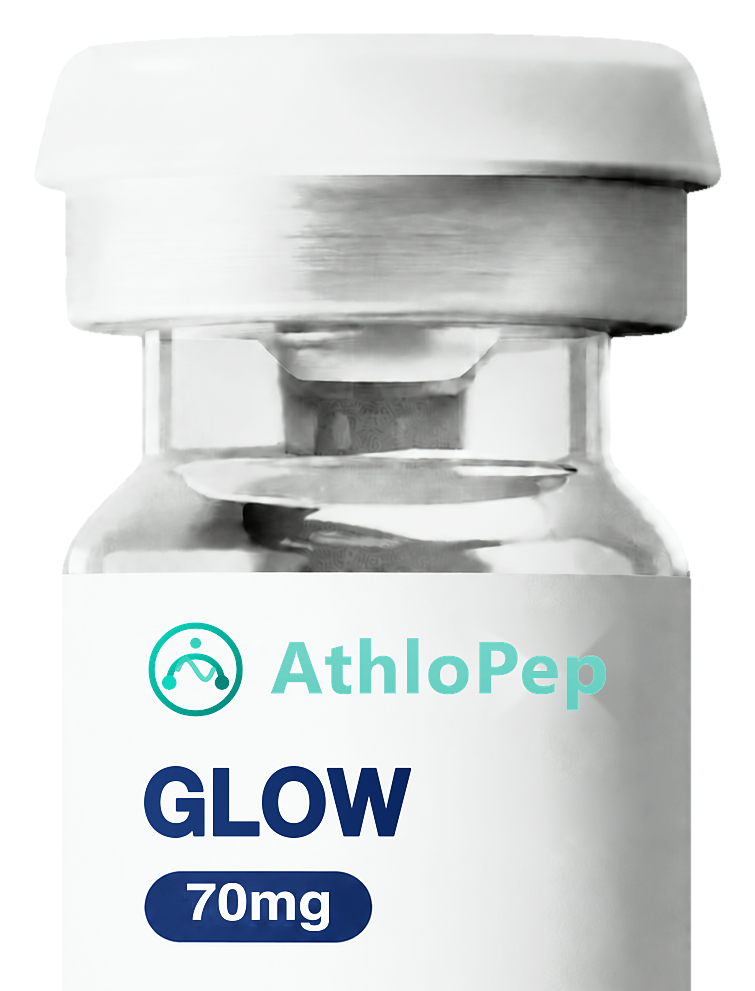
GLOW brings three research peptides together. A careful look at what each component is studied for, and why blend evidence is not the same as single-compound evidence.
Read articleTell us what you need. An email address is required so we can reply.