Research Peptide Manufacturing: From Bench to Vial
A step-by-step view of how research peptides are assembled on solid-phase resin and how process choices influence final purity.
Read article
Why some peptides persist for days and others for minutes, and how structural features let researchers predict stability.
Some peptides survive in the body for days; others break down within minutes of injection. The difference comes down to a handful of structural features researchers can predict, and design around.
Peptide stability refers to how quickly a short chain of amino acids breaks down, while half‑life measures the time it takes for half of the original amount to disappear under a given set of conditions. Researchers have long noticed that two seemingly similar peptides can behave very differently – one persisting for days in a test tube, another vanishing within minutes. Understanding why this happens is essential for designing experiments that rely on consistent peptide concentrations.
Current investigations focus on a handful of concrete questions that shape how peptide stability is assessed and potentially improved.
Peptides are vulnerable to three broad categories of attack. First, proteolytic enzymes (proteases) recognize specific peptide bonds and cleave them, much like scissors cutting a ribbon; the pattern of amino acids determines whether a protease can latch on. Second, chemical instability such as oxidation (loss of electrons) or deamidation (conversion of asparagine to aspartic acid) can alter the backbone, leading to loss of function or aggregation into insoluble clumps. Third, physical factors like temperature and pH can accelerate both enzymatic and chemical breakdown. Researchers can intervene at each step – for example, inserting a D‑amino acid makes the peptide invisible to many proteases, while linking the peptide to a bulky polymer (PEGylation) shields it from both enzymes and oxidative agents, effectively lengthening its observable half‑life.
In laboratories, peptides are commonly incubated in buffered solutions that mimic physiological conditions, often supplemented with serum to provide a realistic enzyme mix. Studies routinely monitor the remaining intact peptide over time using high‑performance liquid chromatography (HPLC) or mass spectrometry. Results consistently show that linear, unmodified peptides can lose 50 % of their signal within minutes to an hour, whereas cyclised or D‑amino‑acid‑substituted variants retain a detectable fraction for several hours to days, depending on the exact conditions.
When peptides are introduced into rodents, researchers measure plasma concentrations at multiple time points to calculate an in‑vivo half‑life. Unmodified linear peptides often exhibit rapid clearance, with half‑lives measured in minutes due to kidney filtration and protease activity. Modified peptides – for instance, those with a lipid tail attached (lipidation) or bound to albumin through a reversible linker – demonstrate markedly longer circulatory persistence, sometimes extending to several hours. These differences translate into altered pharmacodynamic read‑outs, such as prolonged receptor activation in target tissues.
To date, there are no published clinical studies that directly assess the half‑life of the research‑grade peptides discussed in this article. Human investigations are limited by regulatory requirements that restrict the use of unapproved compounds, which is why most stability data remain in the pre‑clinical stage. The absence of human pharmacokinetic data means that extrapolating animal or in‑vitro findings to people must be done with caution.
Compared with classic linear peptides such as a simple octapeptide, engineered analogues that incorporate cyclisation or D‑amino acids behave more like small proteins, showing resistance to both proteolysis and chemical decay. Peptides that are PEGylated or lipidated share a similarity with therapeutic biologics that use the same strategies to stay in the bloodstream longer, yet the research‑grade versions are typically produced without the extensive purification steps seen in pharmaceutical manufacturing. This distinction is important because the level of impurity and the exact degree of modification can influence measured stability, making direct head‑to‑head comparisons challenging.
Key gaps remain around how storage conditions translate to in‑vivo performance – for example, whether a peptide that remains stable at –20 °C for months will retain the same half‑life after being thawed and re‑solved. Long‑term safety of heavily modified peptides has not been established, particularly when repeated dosing is contemplated in animal studies. The impact of individual variability in protease expression on peptide clearance is another open area, as is the potential for unexpected immune recognition of non‑natural amino‑acid sequences.
Operator’s desk: Even with a peptide that appears stable on paper, the act of re‑solving a lyophilised powder can introduce degradation if the solvent is not chilled or if the solution is left at room temperature for too long. Researchers should track the time between reconstitution and assay to avoid misleading results.
All information provided here is for research and educational purposes only. The peptides discussed are not listed on the Australian Register of Therapeutic Goods (ARTG) and must not be used for human or animal consumption.
Links lead to the original paper, DOI record, or open-access full text where available.
This compound is supplied for in vitro laboratory and educational research only. It is not listed on the Australian Register of Therapeutic Goods (ARTG) and is not a therapeutic good under the Therapeutic Goods Act 1989 (Cth). Not for human or animal consumption, therapeutic use, or diagnostic procedures. By purchasing, you confirm you are a qualified researcher or acting on behalf of a licensed research facility, and you assume full responsibility for the safe handling, storage, and lawful use of this compound.
A step-by-step view of how research peptides are assembled on solid-phase resin and how process choices influence final purity.
Read articleHow peptides are grouped by length and function, from short tripeptides to longer chains, and why classification matters in research.
Read articleA plain-language look at the regulatory context for research-use peptides in Australia and what labs should verify when sourcing compounds.
Read article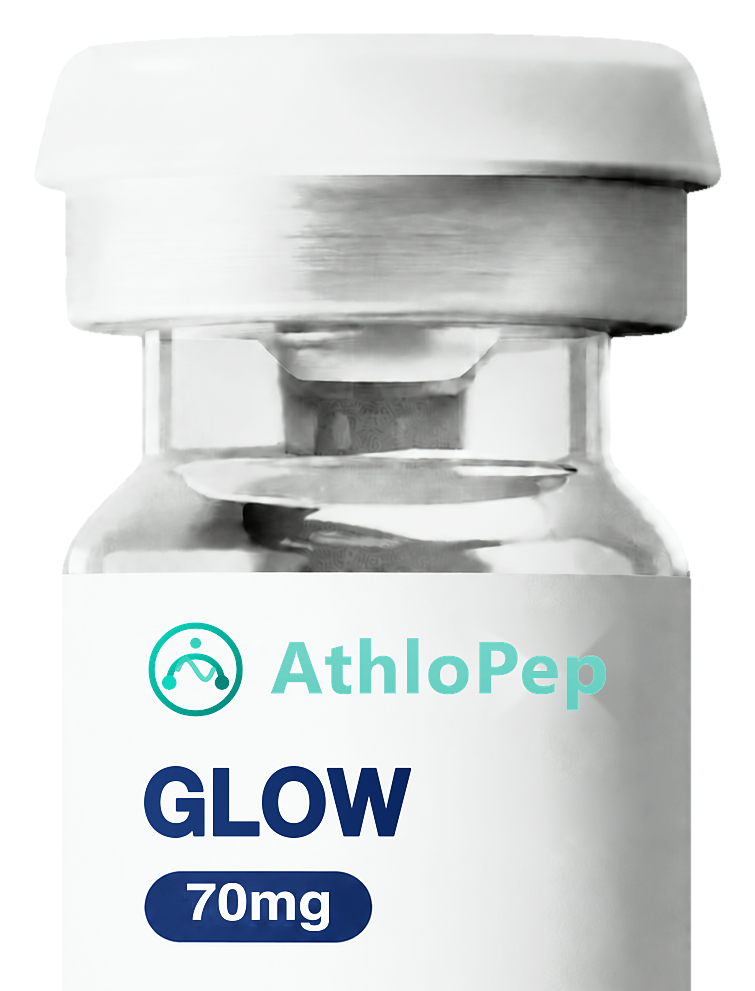
GLOW brings three research peptides together. A careful look at what each component is studied for, and why blend evidence is not the same as single-compound evidence.
Read articleTell us what you need. An email address is required so we can reply.