Australian Research Peptide Rules Explained
A plain-language look at the regulatory context for research-use peptides in Australia and what labs should verify when sourcing compounds.
Read article
Two peptides often discussed together, explained by their distinct receptor pathways and research characteristics.
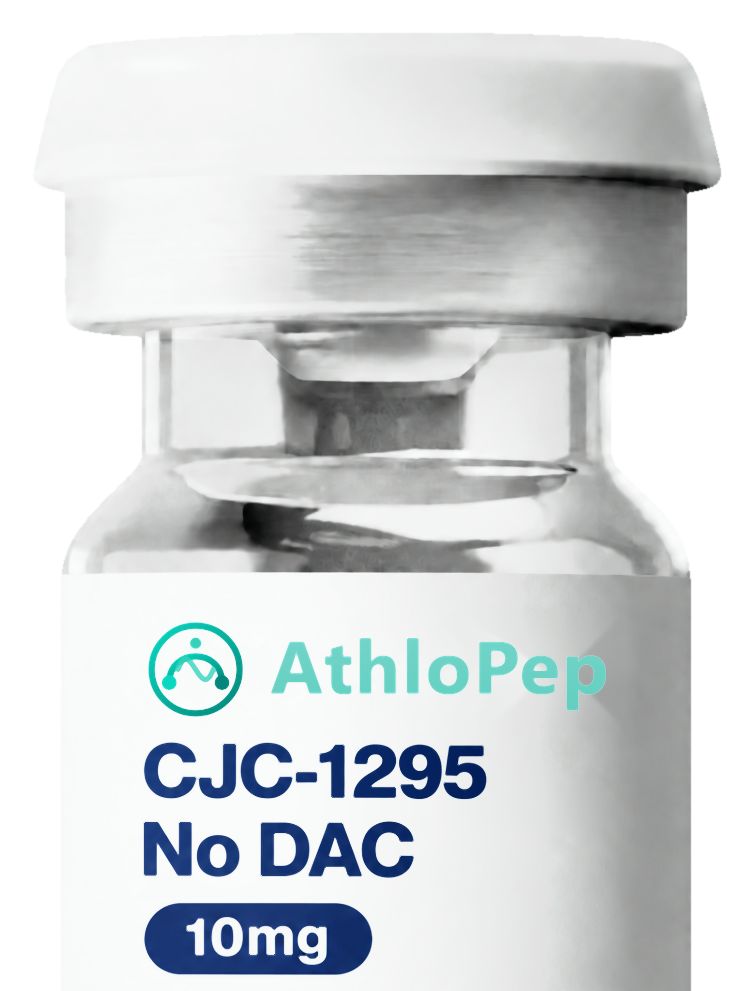
CJC-1295 and Ipamorelin are both studied in growth-hormone research, but they are different compounds with different mechanisms. A plain-English comparison of the two research peptides.
Check current availability and choose options on the product page. Research Use Only.
If you are looking at growth-hormone research peptides, CJC-1295 and Ipamorelin come up constantly - often together. They are frequently described as similar, but they are different compounds that work through different mechanisms. Here is the plain-English difference.
For standalone catalogue materials, see CJC-1295 No DAC 10mg and Ipamorelin 10mg . CJC-1295 with DAC 5mg is a different material from No DAC. The CJC No DAC + Ipamorelin 10mg blend contains 5mg of each component; it is not either standalone product. Research Use Only.
CJC-1295 is a growth-hormone-releasing hormone (GHRH) analogue - it mimics the signal that tells the pituitary to release growth hormone. Ipamorelin is a growth-hormone-releasing peptide (GHRP) - it works on a different receptor (the ghrelin receptor) and is often used alongside GHRH-type compounds in research. They are complementary, not interchangeable. [ 1 ] , [ 2 ]
CJC-1295 is a modified version of GHRH, the natural hormone that stimulates growth-hormone release. The modification was designed to make it last longer in the body. Studies in healthy adults report that a single administration can raise growth hormone and IGF-1 levels for days, which is why it is called a long-acting GHRH analogue. [ 3 ] , [ 4 ]
Ipamorelin belongs to a different family - the GHRPs. These compounds bind the ghrelin receptor and are studied for their ability to stimulate growth-hormone release through that pathway. Animal studies describe it as potent and long-acting for a GHRP, with a relatively selective profile. [ 2 ]
In research protocols, GHRH analogues and GHRPs are frequently combined because they act on different parts of the growth-hormone axis. That pairing is a design choice in research, not a recommendation - and any such protocol should be reviewed by the institutional ethics and safety processes that govern the experiment. [ 1 ] , [ 2 ]
Evidence note: this comparison describes research literature only. It is not a recommendation, a protocol, or evidence of safety or efficacy in humans.
Both compounds are supplied for research and educational purposes only. Neither is listed on the Australian Register of Therapeutic Goods (ARTG), and neither must be consumed by humans or animals.
For related research, see the CJC-1295 + Ipamorelin stack overview and Ipamorelin GHRH selectivity .
Links lead to the original paper, DOI record, or open-access full text where available.
This compound is supplied for in vitro laboratory and educational research only. It is not listed on the Australian Register of Therapeutic Goods (ARTG) and is not a therapeutic good under the Therapeutic Goods Act 1989 (Cth). Not for human or animal consumption, therapeutic use, or diagnostic procedures. By purchasing, you confirm you are a qualified researcher or acting on behalf of a licensed research facility, and you assume full responsibility for the safe handling, storage, and lawful use of this compound.
A plain-language look at the regulatory context for research-use peptides in Australia and what labs should verify when sourcing compounds.
Read article
GLOW brings three research peptides together. A careful look at what each component is studied for, and why blend evidence is not the same as single-compound evidence.
Read article
An overview of SS-31, its relationship with cardiolipin in mitochondrial membranes, and how laboratory findings differ from clinical claims.
Read article
The history of DSIP in sleep research, the small human studies that exist, and the limits of the current evidence base.
Read articleTell us what you need. An email address is required so we can reply.