Australian Research Peptide Rules Explained
A plain-language look at the regulatory context for research-use peptides in Australia and what labs should verify when sourcing compounds.
Read article
The history of DSIP in sleep research, the small human studies that exist, and the limits of the current evidence base.
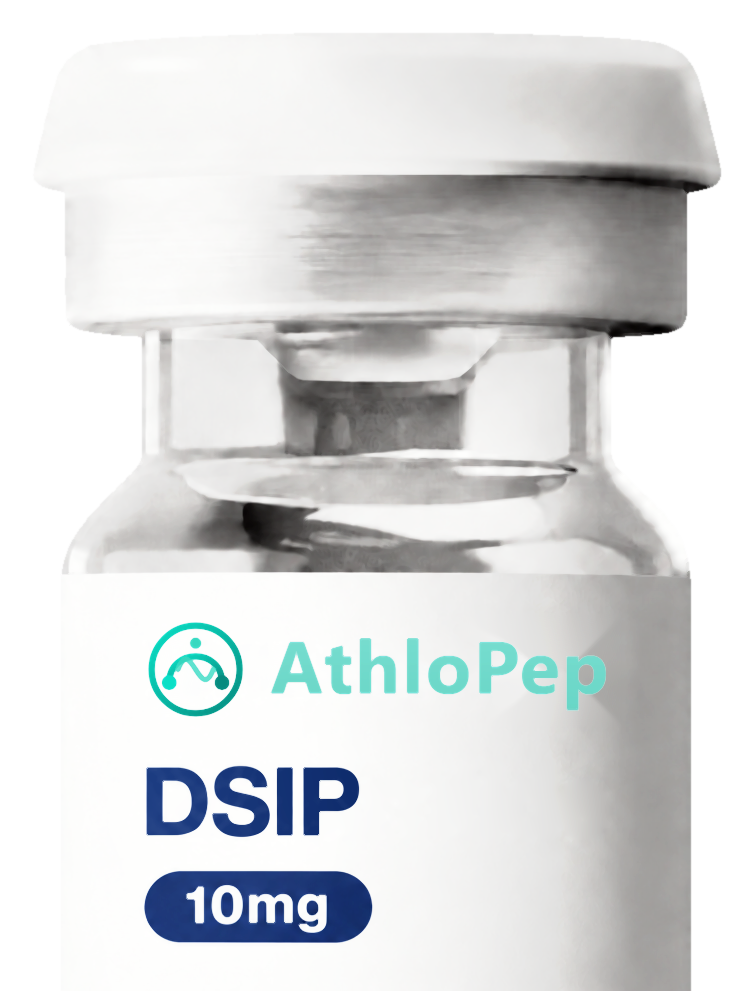
What is DSIP? A plain-English guide to its discovery, small human sleep studies and the limits of the evidence behind delta sleep-inducing peptide.
Check current availability and choose options on the product page. Research Use Only.
DSIP stands for delta sleep-inducing peptide. It is a short, nine-amino-acid peptide first characterised through experiments examining electrical brain activity in rabbits. Its name describes that discovery context, not a guarantee of deeper sleep. The useful question is what each experiment measured, rather than what the name appears to promise. [ 1 ]
This article separates the original animal work from two small human studies. It is a focused reading guide, not a systematic review of every DSIP paper. supplies DSIP as Research Use Only material for in vitro laboratory research, not for human or animal consumption.
In their 1977 paper, Schoenenberger and Monnier reported isolating DSIP from rabbits and identifying its amino-acid sequence. Their synthetic-peptide comparison included altered sequences and shorter fragments. Across 58 rabbits including controls, the authors reported a specific increase in delta and spindle EEG patterns with the synthetic DSIP sequence. [ 1 ]
EEG is a recording of electrical activity in the brain. A change in one EEG pattern is a defined experimental observation. It is not interchangeable with feeling more rested, sleeping longer at home, or a demonstrated benefit in a different species. The original study is important for understanding identity and the origin of the research question, not for predicting a personal outcome.
A 1981 double-blind crossover experiment involved six healthy volunteers. Each participant contributed observations under both DSIP and placebo conditions. The researchers reported differences in sleep during the observation period and in some subsequent night-time sleep measures. [ 2 ]
A crossover design can help control differences between individuals, but six people still provide a narrow evidence base. A result in healthy volunteers also cannot answer every question about persistent sleep difficulties. Read the population, observation window and measured endpoint alongside the headline, rather than treating this early signal as a settled conclusion.
In 1992, Bes and colleagues studied 16 people with chronic insomnia using a double-blind, matched-pairs design. Some objective sleep measures differed from placebo, but the authors described the statistically significant effects as weak and potentially partly explained by changes in the placebo group. Subjective sleep quality did not improve. [ 3 ]
These papers therefore do not support a simple, consistent promise. They ask related questions in different populations and report different patterns of findings. The later study is especially useful when checking whether an optimistic summary has omitted less favourable evidence.
Before comparing papers, write down the study model, participant count, control, principal endpoint and authors’ limitations. Keep favourable and unfavourable findings in the same evidence record. This avoids turning a selective collection of results into a claim that the original studies did not make.
A literature reference identifies the material used in that experiment. It does not authenticate a current vial. For procurement, review the declared identity, stated amount, batch identifier and available analytical documentation separately. A purity percentage is not a substitute for an identity result, and neither establishes suitability for personal use.
The COA review checklist explains how to connect a report to its material. For the distinction between a measurement and a product claim, see how to read a certificate of analysis . The DSIP product page remains the source for current catalogue details and availability.
DSIP has a documented history in sleep research, but its name is more definite than the small, mixed human evidence summarised here. Read it as a research topic with important unanswered questions. This article provides no personal-use, administration or dosing guidance. Research Use Only.
Links lead to the original paper, DOI record, or open-access full text where available.
This compound is supplied for in vitro laboratory and educational research only. It is not listed on the Australian Register of Therapeutic Goods (ARTG) and is not a therapeutic good under the Therapeutic Goods Act 1989 (Cth). Not for human or animal consumption, therapeutic use, or diagnostic procedures. By purchasing, you confirm you are a qualified researcher or acting on behalf of a licensed research facility, and you assume full responsibility for the safe handling, storage, and lawful use of this compound.
A plain-language look at the regulatory context for research-use peptides in Australia and what labs should verify when sourcing compounds.
Read article
GLOW brings three research peptides together. A careful look at what each component is studied for, and why blend evidence is not the same as single-compound evidence.
Read article
An overview of SS-31, its relationship with cardiolipin in mitochondrial membranes, and how laboratory findings differ from clinical claims.
Read articleA comparison of three compounds frequently studied in tissue models, how their research backgrounds differ, and why they are often examined together.
Read articleTell us what you need. An email address is required so we can reply.