Peptides for Tissue Research: BPC-157, TB-500, GHK-Cu
A comparison of three compounds frequently studied in tissue models, how their research backgrounds differ, and why they are often examined together.
Read article
What distinguishes single, dual and triple receptor agonist profiles in metabolic peptide research.
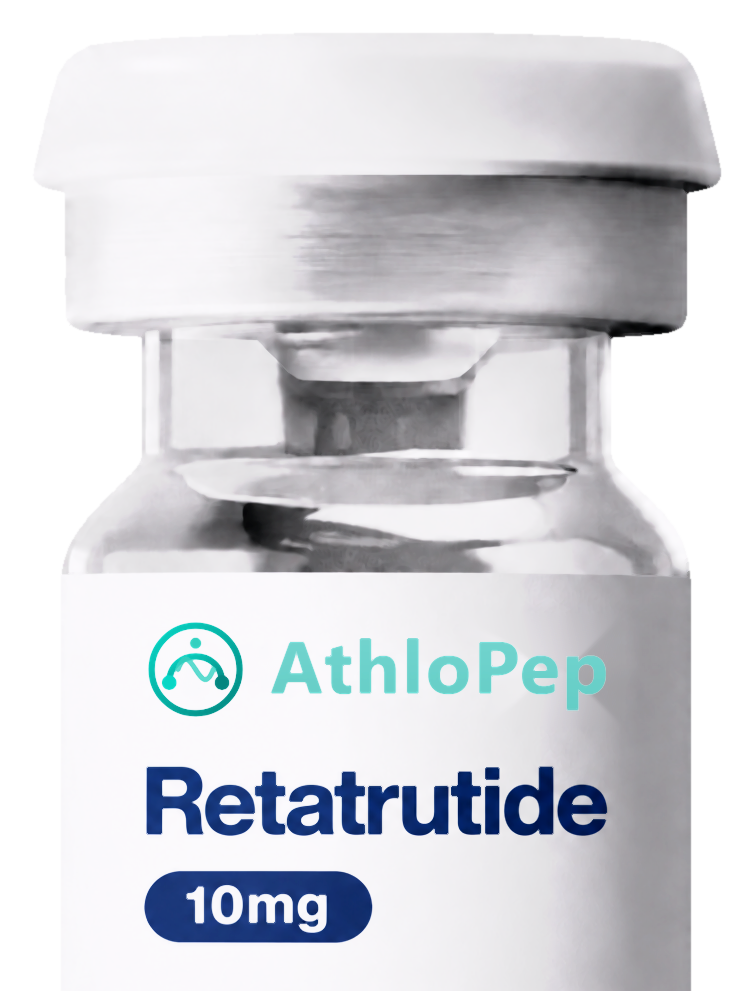
One receptor, two receptors, or three - the incretin research family now spans three distinct agonist profiles. Here is what actually separates Retatrutide, Tirzepatide, and Semaglutide.
Buy Retatrutide (Reta) in Australia · compare strengths
Check current availability and choose options on the product page. Research Use Only.
Retatrutide, Tirzepatide, and Semaglutide are the three compounds researchers most often put side by side when discussing incretin-pathway pharmacology. All three target the GLP-1 receptor, but that is where the similarity ends - each adds (or doesn't add) further receptor activity on top of it, and that receptor count is the entire story behind why researchers treat them as three distinct tools rather than three versions of one compound.
Each added receptor is the entire reason the newer compound exists as a distinct research tool rather than just being "more of the last one."
GLP-1 and GIP are both incretin hormones - signals your gut releases after eating that influence insulin release and appetite regulation. Semaglutide's research profile comes entirely from GLP-1 activity alone, which is also why it has the longest and largest published research history of the three. Tirzepatide adds GIP activity on top, which is what makes it interesting to researchers studying combined incretin pathways. Glucagon, the third receptor Retatrutide adds, works differently again: it's more associated with energy expenditure and how the liver handles fat. Adding glucagon receptor activity into the mix is what researchers believe gives Retatrutide its distinct research profile compared to a single- or dual-receptor agonist.
Semaglutide is the most-studied of the three by a wide margin, simply because it reached the research and clinical literature first. That depth of published data makes it a useful baseline: researchers comparing a newer dual- or triple-agonist against Semaglutide are effectively asking "what does the added receptor activity change relative to GLP-1 activity alone?" does not stock Semaglutide - it is included here purely as the reference point the other two are usually measured against.
Phase 2 clinical trial data on Retatrutide has reported substantial body weight reduction at higher doses studied, along with notable reductions in liver fat in sub-studies looking at hepatic outcomes. Tirzepatide's dual-receptor mechanism has a longer research history and a larger published dataset behind it, given its earlier development timeline. Head-to-head comparative studies are still limited, so most of what researchers currently rely on is a receptor-by-receptor comparison rather than large-scale direct trials between the two compounds.
For metabolic research, the question isn't just "which one is stronger" - it's which receptor combination is relevant to the specific pathway being studied. A researcher investigating insulin sensitivity and appetite regulation might be well served by Tirzepatide's dual mechanism. A researcher interested in energy expenditure and hepatic fat metabolism, where glucagon receptor activity plays a role, has a reason to look specifically at Retatrutide instead. The extra receptor isn't just "more of the same effect" - it opens up a different set of research questions entirely.
Long-term data for Retatrutide is still developing, since it's the newer compound of the two with a shorter research history. Comparative studies that isolate the specific contribution of glucagon receptor activity, separate from the shared GLP-1/GIP effects, are still limited. How the three-receptor mechanism interacts over extended research timelines is an active area of ongoing investigation.
A complementary research direction sits outside the incretin system entirely: the amylin pathway. Cagrilintide , a long-acting amylin analogue, is studied for appetite and body-weight signalling through a distinct receptor family, and combination research designs increasingly pair incretin agonists with amylin-pathway compounds to compare how the two signalling systems interact.
does not currently stock Tirzepatide or Semaglutide. This article is provided as research and educational context for comparing receptor pharmacology.
Retatrutide is supplied for in vitro laboratory research purposes only. It is not listed on the Australian Register of Therapeutic Goods (ARTG) and is not intended for human or animal consumption.
Researching incretin receptor pharmacology? View Retatrutide 10mg - HPLC tested, COA included, same-day Australian dispatch.
Links lead to the original paper, DOI record, or open-access full text where available.
This compound is supplied for in vitro laboratory and educational research only. It is not listed on the Australian Register of Therapeutic Goods (ARTG) and is not a therapeutic good under the Therapeutic Goods Act 1989 (Cth). Not for human or animal consumption, therapeutic use, or diagnostic procedures. By purchasing, you confirm you are a qualified researcher or acting on behalf of a licensed research facility, and you assume full responsibility for the safe handling, storage, and lawful use of this compound.
A comparison of three compounds frequently studied in tissue models, how their research backgrounds differ, and why they are often examined together.
Read article
A comparison of the two CJC-1295 forms, focusing on the single chemical modification that changes how long the peptide persists in research systems.
Read article
How Tesamorelin is positioned as a stabilised GHRH analogue and why it is used as a reference point in growth-hormone research.
Read article
A closer look at how Ipamorelin and CJC-1295 act on different receptors and timescales within the growth-hormone system.
Read articleTell us what you need. An email address is required so we can reply.