HPLC Purity Standards for Research Peptides
What a purity percentage actually means in peptide testing, how HPLC measures it, and why testing conditions can affect the reported number.
Read article
The general mathematics behind reconstitution ratios, presented as a concept rather than a protocol for any specific use.
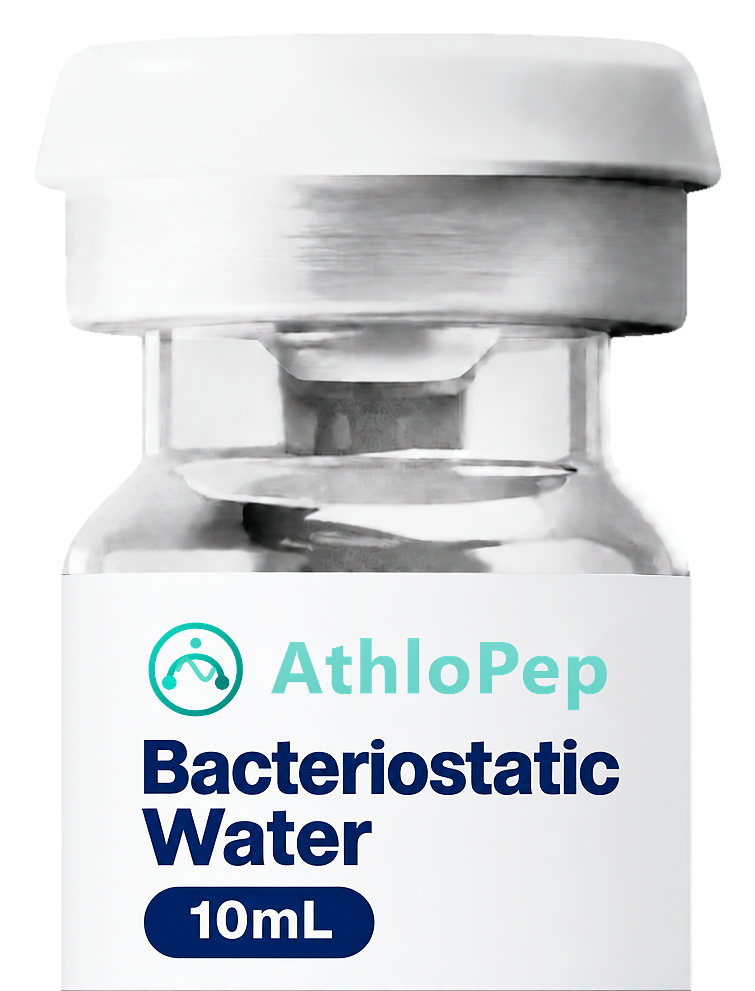
"How much BAC water for Reta?" is one of the most searched questions in peptide research. Here's the general maths behind reconstitution ratios - not a protocol, just the concept explained simply.
Check current availability and choose options on the product page. Research Use Only.
If you've searched anything like "how much BAC water for Reta" or "how many ml for a 10mg vial", you've run into one of the most common questions in peptide research. This article walks through the general maths behind reconstitution ratios - the concept, not a specific protocol. Every research setting is different, and the right ratio for a given experiment depends on the researcher's own design, equipment, and institutional guidelines.
Reconstitution just means dissolving a freeze-dried (lyophilised) peptide powder into a liquid, usually bacteriostatic water (BAC water), so it can be measured and handled in solution. The relationship between the three numbers involved is simple:
That's it. Everything else - syringe markings and dilution charts - is just a different way of expressing that one equation. If you know any two of the three numbers, you can work out the third.
Say, purely as an example, a researcher has a 10mg vial and adds 2mL of BAC water. Using the formula above: 10mg ÷ 2mL = 5mg/mL. If the same 10mg vial were reconstituted with 5mL instead, the concentration would drop to 2mg/mL. Same peptide, same vial, completely different concentration - purely because of how much liquid went in. This is why the volume of BAC water added is the single biggest factor in how concentrated a solution ends up.
We can explain the maths - and we just did. What we can't do is recommend a specific reconstitution ratio or protocol for BPC-157, TB-500, Retatrutide, GHK-Cu, Ipamorelin, CJC-1295, Melanotan II, or Semax, because that depends entirely on the concentration your own research design calls for. Every vial we ship lists its exact peptide content on the label and Certificate of Analysis, which is the starting number you'll need for the formula above. From there, the volume of BAC water you add is a decision for your own protocol or supervising researcher.
Bacteriostatic water is just sterile water with a small amount of benzyl alcohol added, which helps prevent bacterial growth in a multi-use vial once it's been opened. It's chosen specifically for lab and research handling because of that preservative property, compared to plain sterile water which doesn't have the same shelf life once punctured. supplies USP-grade bacteriostatic water 10mL in stock for same-business-day Australian dispatch.
To run the division above without doing it by hand, the peptide calculator takes a vial amount and a diluent volume and returns the resulting concentration in mg/mL.
This article explains general reconstitution mathematics for research and educational purposes. It is not dosing, administration, or protocol advice. For specific reconstitution guidance, consult your institution's research protocols or a supervising researcher.
All compounds referenced are supplied for in vitro laboratory research purposes only. They are not listed on the Australian Register of Therapeutic Goods (ARTG) and are not intended for human or animal consumption.
Every vial ships with exact peptide content and a batch-specific COA. Browse the full compound catalogue .
Links lead to the original paper, DOI record, or open-access full text where available.
This compound is supplied for in vitro laboratory and educational research only. It is not listed on the Australian Register of Therapeutic Goods (ARTG) and is not a therapeutic good under the Therapeutic Goods Act 1989 (Cth). Not for human or animal consumption, therapeutic use, or diagnostic procedures. By purchasing, you confirm you are a qualified researcher or acting on behalf of a licensed research facility, and you assume full responsibility for the safe handling, storage, and lawful use of this compound.
What a purity percentage actually means in peptide testing, how HPLC measures it, and why testing conditions can affect the reported number.
Read article
Why correct reconstitution and storage matter as much as purity, and how avoidable handling mistakes compromise research material.
Read articleThe three numbers that matter most on a peptide COA — purity, mass and counter-ion content — and how to interpret them.
Read articleA plain-language look at the regulatory context for research-use peptides in Australia and what labs should verify when sourcing compounds.
Read articleTell us what you need. An email address is required so we can reply.